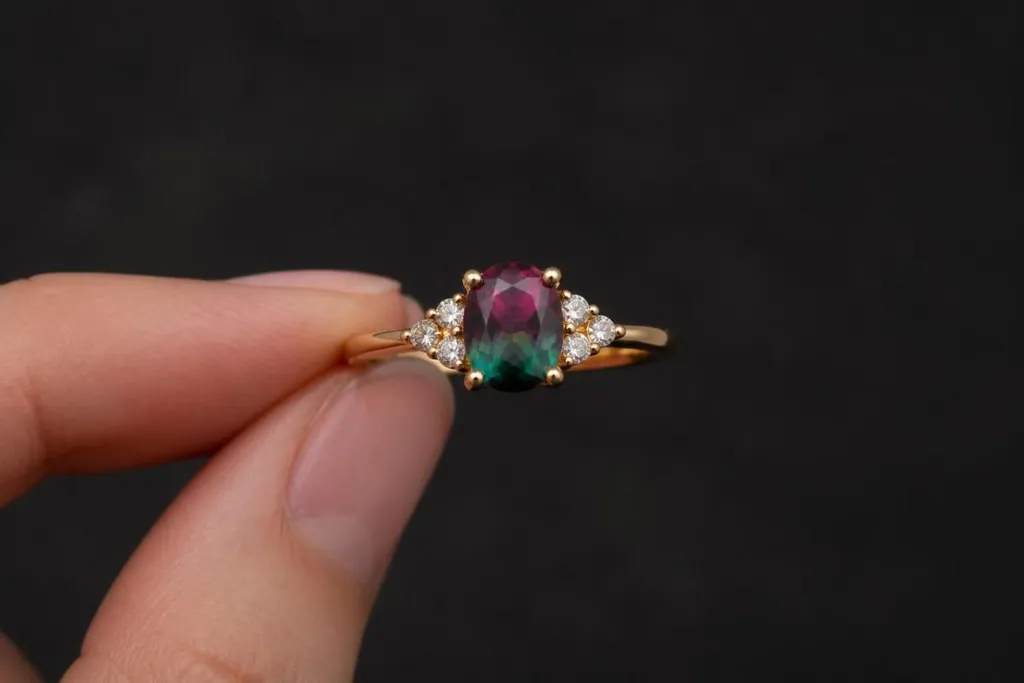
The traditional engagement ring formula is no longer the only route to something enduring. Colour can give a ring an immediate sense of identity, shifting attention from conventional expectations towards personal taste. Deep blues, vivid greens, romantic pinks and other gemstone tones can all create a focal point that feels significant without depending on a colourless diamond.
For couples interested in a more individual approach, timeless lab grown coloured gemstone engagement rings demonstrate how colour can work within fine engagement jewellery. Lab-grown gemstones offer opportunities to explore distinctive hues alongside classic settings, precious metals and diamond accents. The important decision is not simply which colour looks most dramatic, but which combination of gemstone, cut and setting will remain appealing through years of everyday wear.
Choose Colour for Character, Not Novelty
A coloured gemstone immediately changes the mood of an engagement ring. Blue can feel refined and established, while pink introduces warmth and softness. Richer, more saturated colours tend to create stronger contrast against the metal and surrounding stones.
Personal style should lead the decision. Someone whose wardrobe and jewellery collection favour cooler tones may naturally gravitate towards blue or green. A wearer who regularly chooses warmer metals and softer colours might find pink or other warm-toned gemstones more harmonious.
It is also worth viewing colour in different lighting. Gemstones can appear noticeably different in daylight, warm interior lighting and lower-light environments. A colour that remains attractive across those conditions is generally more useful than one chosen because it looks exceptionally vivid under a single light source.
Unlike a temporary fashion colour, the centre stone of an engagement ring becomes part of a person's everyday jewellery. It should feel familiar enough to live with, while still retaining the individuality that made it appealing initially.
Cut and Proportion Shape How Colour Appears
Gemstone cut influences much more than outline. Faceting determines how light travels through the stone and can affect the perceived intensity and distribution of colour.
Oval and cushion cuts are versatile choices because their curved silhouettes work naturally with both traditional and contemporary settings. Elongated shapes can also provide generous finger coverage, making them attractive to someone who wants presence without relying exclusively on carat weight.
Emerald-style cuts offer a more structured interpretation. Their longer facets can create broader areas of visible colour and a distinctly architectural appearance. Round cuts provide symmetry and can work particularly well when surrounded by contrasting accent stones.
Size should be judged as part of the complete design. Someone might choose a 2-carat coloured gemstone because the larger surface gives a favourite hue greater visual impact. Another wearer may prefer a smaller centre stone framed by diamonds because the contrast creates enough presence without requiring greater scale.
The strongest choice is usually the proportion that makes the colour look intentional on the hand.
Use the Setting to Frame the Gemstone
Setting design can either let the gemstone stand alone or deliberately amplify its colour.
A solitaire keeps the composition straightforward. With no surrounding stones, the gemstone's shape and hue become the defining features of the ring. This approach can make an unusual colour feel particularly modern.
Halo settings use contrast differently. A border of colourless diamonds or lab-grown diamonds can emphasise the centre gemstone and make its colour appear more pronounced. Diamond-set shoulders extend that brightness along the band, while trilogy settings allow colour to interact with complementary side stones.
Metal choice has an equally strong influence. Platinum and white gold provide a cool, neutral frame that can make saturated colours appear crisp. Yellow gold introduces warmth and can produce a richer, more traditional fine-jewellery effect. Rose gold works particularly well where a softer or more romantic palette is desired.
Consider Everyday Wear Before Choosing
An engagement gemstone needs to suit daily life as well as personal style. Different gemstone materials have different levels of hardness and toughness, so suitability for frequent wear should be considered alongside appearance.
Setting design can provide additional protection. Exposed corners and points may require carefully positioned claws, while someone with an active lifestyle might prefer a lower-profile construction that is less likely to catch.
Routine care matters too. Hand creams, soaps and everyday residue can dull both gemstones and surrounding accent stones. Appropriate gentle cleaning and periodic professional inspection help maintain the ring's appearance and ensure the setting remains secure.
Final Thought
Coloured lab-grown gemstone rings offer a compelling alternative to the conventional colourless engagement ring, but their appeal should extend beyond simply being different. Colour works best when it reflects the wearer's established taste and is supported by a thoughtfully chosen cut, setting and metal.
A successful gemstone engagement ring does not need to reject tradition entirely. It can borrow the proportions, craftsmanship and elegance of classic fine jewellery while using colour to tell a more individual story one capable of feeling distinctive now and equally considered decades from today.