
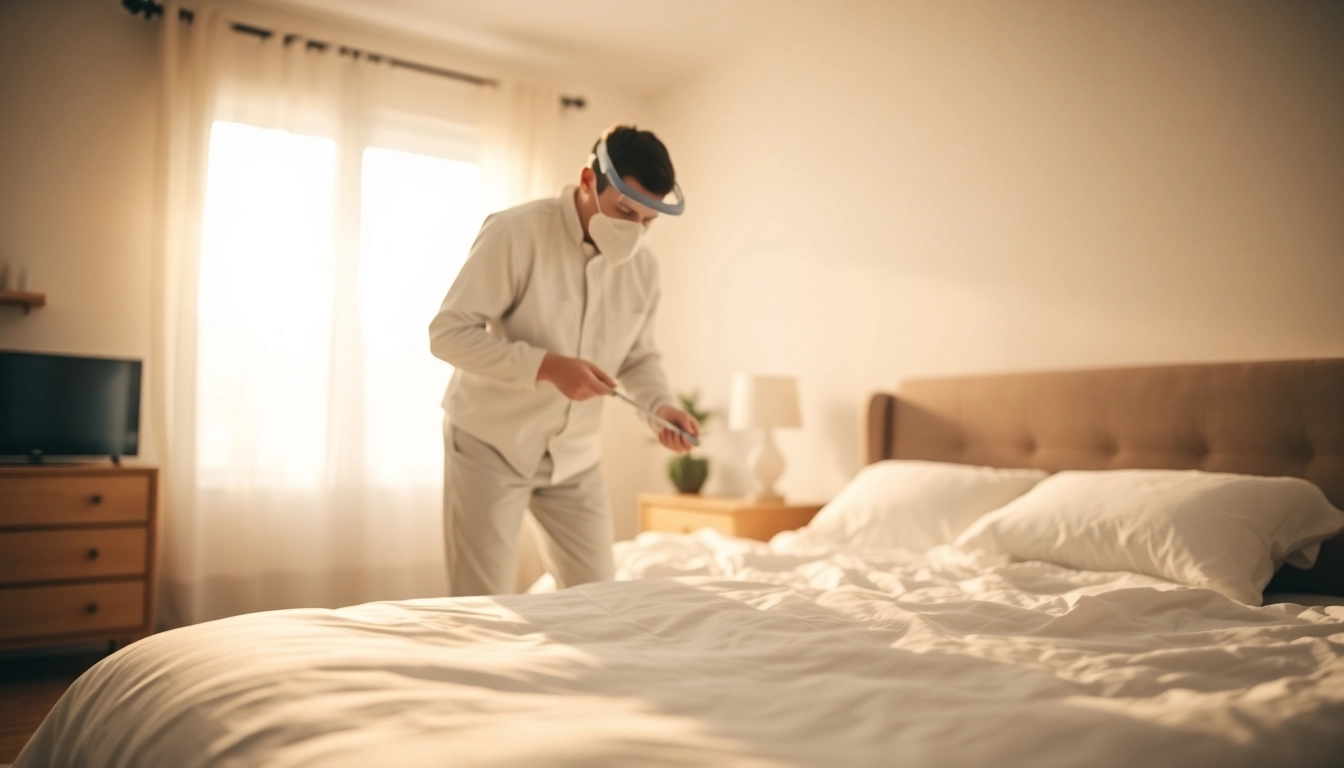
Understanding Bed Bugs and Their Behavior
What Are Bed Bugs?
Bed bugs are small, brownish insects that feed exclusively on the blood of animals or humans. They are oval-shaped, flat, and about the size of an apple seed. Adult bed bugs can grow to about 1/4 inch in length, while nymphs are much smaller and lighter in color, making them harder to detect. Bed bugs are notorious for their ability to go undetected until they have multiplied significantly, and they can live for several months without feeding. This resilience makes them particularly challenging in the realm of bed bug pest control.
Common Signs of Infestation
Identifying a bed bug infestation can be challenging. Common signs include:
- Rusty or reddish stains on bed sheets or mattresses caused by crushed bed bugs.
- Dark spots (excrement) about the size of a pinhead on bedding, furniture, or walls.
- Eggs and molted skins in hidden areas.
- Bed bugs themselves can often be found hiding in mattress seams, headboards, and other furniture.
It’s essential to conduct regular inspections to catch infestations early.
The Life Cycle of Bed Bugs
Bed bugs undergo a simple metamorphosis consisting of three stages: egg, nymph, and adult. The typical life cycle starts when the female bed bug lays around 200 to 500 eggs during her lifetime. The eggs hatch in about a week into nymphs, which require at least one blood meal before molting into adults. Each nymph will molt five times before reaching adulthood. Depending on environmental factors and availability of food, this process can take anywhere from a few weeks to several months.
Challenges in Bed Bug Pest Control
Why Bed Bugs Are Difficult to Eliminate
Bed bugs are notoriously difficult to eradicate due to their small size, reproduction rate, and ability to hide in various locations. Their flat bodies allow them to conceal themselves in tight spaces, making detection difficult. Furthermore, their reproductive speed means an infestation can grow rapidly. Moreover, bed bugs are resistant to many over-the-counter pesticides, which can make DIY solutions less effective.
Common Mistakes in DIY Treatments
Many who attempt DIY bed bug control make common errors, such as:
- Using ineffective insecticides without proper guidance.
- Failing to treat all infested areas, leading to recurring problems.
- Not combining methods, such as vacuuming followed by insecticide use.
These mistakes can worsen the infestation and lead to higher costs in the long run.
Identifying Hidden Infestation Areas
Because bed bugs can hide in a variety of areas, it is crucial to know where to look. Beyond mattresses and bedding, check:
- Cracks and crevices in walls and floors.
- Furniture joints and seams.
- Behind baseboards and electrical outlets.
- In luggage, clothing, and other personal belongings.
Conducting thorough inspections can help identify infestations before they escalate.
Effective Bed Bug Pest Control Methods
Integrated Pest Management (IPM) Approach
The Integrated Pest Management (IPM) approach focuses on treating bed bug infestations with a combination of methods rather than relying solely on chemical treatments. This holistic strategy includes:
- Monitoring and identification of infested areas.
- Use of non-chemical controls like vacuuming and steam cleaning.
- Application of targeted chemical treatments as needed.
- Preventative measures such as encasements for mattresses and box springs.
IPM aims to minimize health risks while effectively managing the pest population.
Using Chemical Treatments Safely
When using chemical treatments for bed bugs, safety should always be a priority. Professional-grade insecticides are available that can be effective against bed bugs. However, it’s essential to:
- Follow label instructions carefully to avoid health risks.
- Consider using targeted applications to reduce chemical exposure to you and your pets.
- Combine chemical treatments with non-chemical methods to enhance effectiveness.
Always consult with a pest control professional for recommendations tailored to your situation.
Heat and Cold Treatments Explained
Both heat and cold are effective in eliminating bed bugs from infested areas. Heat treatments involve raising the temperature of an impacted area to at least 120°F (49°C) for several hours to ensure all life stages are killed. Conversely, cold treatments involve exposing bed bugs to temperatures below 32°F (0°C) for an extended period, which can also be effective. Both methods can be safe and effective when used appropriately.
Preparing Your Home for Pest Control
Steps to Take Before Treatment
Before a pest control treatment, preparation is crucial. Follow these steps:
- Remove all bedding and wash it in hot water.
- Vacuum the affected areas thoroughly, including carpets and furniture.
- Declutter areas to allow easier access for treatments.
Effective preparation improves treatment success and can reduce treatment costs.
Essential Cleaning Tips
Maintaining cleanliness in your living space is a vital preventative measure. Regularly clean and inspect your home, focusing on:
- Washing bed linens and clothing weekly.
- Vacuuming frequently to remove any potential eggs or adult bugs.
- Sealing any cracks or crevices where bed bugs may hide.
The more vigilance you maintain, the less likely you are to invite pests into your home.
Protecting Your Belongings
When dealing with a bed bug issue, protecting your belongings is paramount. Use bed bug-proof covers for mattresses and pillows. Store clothes in sealed plastic containers, particularly if you suspect an infestation. Consider using heat treatments for items that cannot be washed. Being proactive about protecting your belongings can prevent a complete loss in severe infestations.
Ongoing Prevention Strategies for Bed Bugs
Maintaining an Infestation-Free Home
Maintaining an infestation-free home requires ongoing vigilance. Regularly inspect sleeping areas, keep personal items off the floor, and watch for signs of bed bugs when traveling. Using protective coverings on mattresses and regular cleaning can significantly reduce the likelihood of a resurgence.
When to Call a Professional
If you find that your infestation is beyond DIY control, it may be time to call a professional. Signs that indicate you need expert help include:
- Recurring infestations despite treatment.
- The sheer scale of the infestation making DIY solutions impractical.
- Health concerns related to pesticide use or potential exposure.
Professional exterminators can provide tailored solutions that are both effective and safe.
Regular Inspection Techniques
Careful and regular inspection is key to preventing bed bug infestations. Techniques include:
- Using visual inspections with flashlights to check for bugs and eggs.
- Employing interceptors under furniture legs to trap bed bugs as they try to move.
- Staying aware of bed bug reports in your area, especially in hotels and shared accommodations.
By incorporating regular inspections into your routine, you can catch infestations before they escalate.
FAQs
What is the best pest control method for bed bugs?
The best approach often combines several methods, including Integrated Pest Management (IPM), chemical treatments, and physical barriers to increase effectiveness.
How can I tell if I have bed bugs?
Signs of bed bugs include rusty stains on bedding, dark spots, eggs, and the bugs themselves in hidden areas. Periodic inspections are advised.
Can I get rid of bed bugs myself?
While DIY methods can be effective for small infestations, severe cases typically require professional intervention to ensure complete elimination.
How do I prevent bed bug infestations?
Preventing bed bugs involves regular cleaning, using protective covers, reducing clutter, and vigilant inspections, particularly after travel.
When should I call an exterminator for bed bugs?
Consider contacting an exterminator if DIY methods fail, the infestation persists, or if there are concerns regarding chemical exposure.